

Tedros Adhanom Ghebreyesus, director general for the World Health Organization who has led the global public health organization through the COVID-19 pandemic, was awarded the Thomas Francis Jr. Medal in Global Public Health in a ceremony on Monday, March 13, 2023 at 3:30 PM in Robertson Auditorium. He will engage with the campus community at various events throughout the day, including a student poster session to showcase global health work and a panel discussion with public health experts from other universities. The ceremony, which will be streamed live, will feature a keynote speech delivered by Tedros followed by a panel discussion of guests and faculty highlighting collective action for a healthier world. A second day of events will celebrate the work of the Center for Global Health Equity and the University of Michigan’s commitment to effective action that advances global public health.
Dr. Tedros Adhanom Ghebreyesus was elected WHO Director-General for a five-year term by WHO Member States at the Seventieth World Health Assembly in May 2017, and was re-elected to a second term in May 2022 during the Seventy-Fifth World Health Assembly. Dr. Tedros was the first WHO Director-General elected from among multiple candidates by the World Health Assembly, and was the first person from the WHO African Region to head the world’s leading public health agency.
Learn more about Dr. Tedros and rewatch the ceremony »

The University of Michigan awards the Thomas Francis, Jr. Medal in Global Public Health to individuals who have made significant contributions to the advancement of global public health. It is one of the highest recognitions granted by the university.
The medal was founded in 2005 on the 50th anniversary of Dr. Francis’ historic announcement of the success of the polio vaccine trials and it is given periodically to a recipient whose contributions have advanced global public health and helped to establish a healthier future for society.
Honoring achievement in global public health
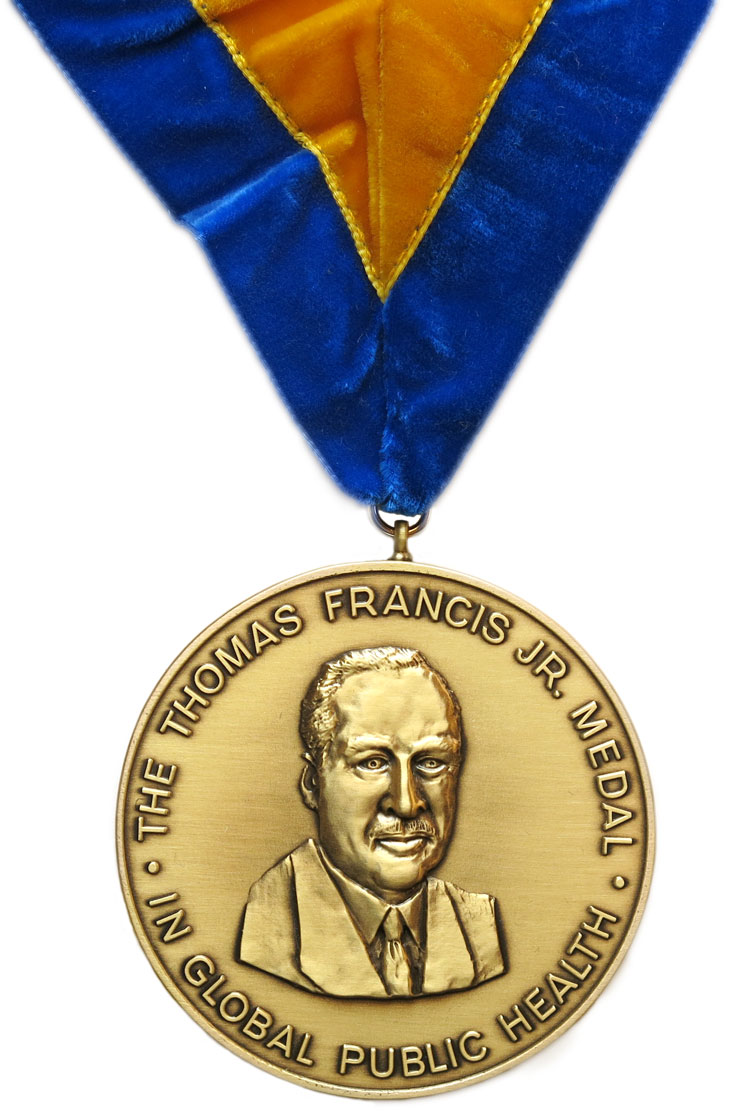
The Thomas Francis, Jr. Medal in Global Public Health advances the University of Michigan legacy in public health by recognizing individuals who have advanced global health through:
- Major scientific discovery or invention
- Leadership in development, implementation, or promotion of effective public health policy
- Seminal support for the development or implementation of effective action that advances global public health
The Francis Medal’s selection committee is comprised of University of Michigan faculty, nationally distinguished public health scholars and advocates, and university leaders, evaluates nominated individuals and recommends a recipient.
The medal is accompanied by a monetary award of $50,000, and the recipient is asked to deliver a keynote address at a symposium on a major topic in world health.
Francis medalists
The medal is given periodically to a recipient whose contributions have advanced global public health and helped to establish a healthier future for society.
The University presented the Thomas Francis, Jr. Medal in Global Public Health for the first time on April 12, 2005 to Dr. William Foege on the 50th anniversary of Francis’ historic announcement that the results of the polio vaccine trials had proven the Salk vaccine to be “safe, effective, and potent.” The medal was next given to Alfred Sommer in 2010 and Sir Fazle Hasan Abed in 2016. The medal will be given periodically to a recipient whose contributions have advanced global public health and helped to establish a healthier future for society.
2022 Recipient: Tedros Adhanom Ghebreyesus

Tedros Adhanom Ghebreyesus, director general for the World Health Organization who has led the global public health organization through the COVID-19 pandemic, will be awarded the Thomas Francis Jr. Medal in Global Public Health.
2016 Recipient: Sir Fazle Hasan Abed

The University of Michigan awarded the Thomas Francis Jr. Medal in Global Public Health to Sir Fazle Hasan Abed, founder and chairperson of BRAC — a Bangladesh-based development organization that works to alleviate poverty by empowering the poor.
2010 Recipient: Alfred Sommer
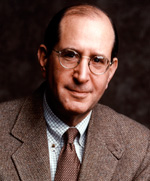
The University of Michigan awarded the Thomas Francis Jr. Medal in Global Public Health to Alfred Sommer, whose research into vitamin A deficiency has saved millions of children from blindness and death.
2005 Recipient: William Foege
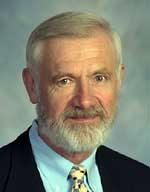
William Foege, the recipient of the first-ever Thomas Francis Jr. Medal in Global Public Health, pioneered a successful strategy to eradicate smallpox in the 1970s. Foege is the former director of the Carter Center and now senior advisor to the Bill and Melinda Gates Foundation.
